Today’s Stock Market Movers Reveal Bifurcated Risk Profile
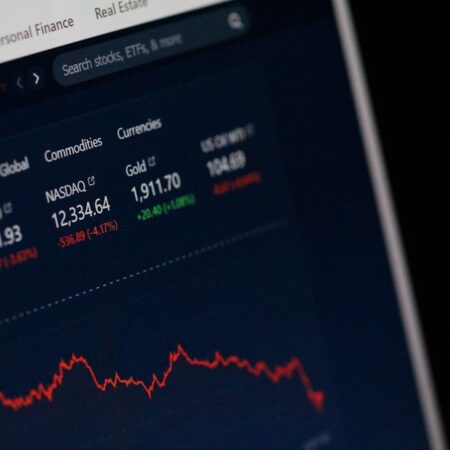
Saturday’s equity session presented a stark portrait of market fragmentation, with stock market movers on March 28 dominated by extreme volatility concentrated in micro-cap and penny-stock territory. The eight gainers exceeding 48% returns clustered almost entirely below $3 per share, while the eight leading decliners—including collapses of 79%, 56%, and 48%—similarly occupied the sub-$5 range. This bifurcation between explosive rallies and severe declines, coupled with extraordinary trading volumes exceeding 80M shares for leading gainers, suggests a market character best described as risk-on speculation meeting forced liquidations. The absence of traditional blue-chip leadership or sector-wide conviction moves indicates retail positioning and technical flows dominate the session narrative rather than fundamental repricing or economic signals.
Top Gainers Paint Picture of Speculative Micro-Cap Clustering
The leading gainers Saturday displayed the classic hallmarks of retail-driven momentum in tightly-grouped price ranges. ARTL soared 230.4075% to $10.54 on 81.2M-share volume, marking the session’s most extreme positive move, followed by SST’s 147.4453% climb to $3.39 with 87.9M shares traded and RMSGW’s 103.75% surge despite minimal 11,017-share volume. The clustering of the top eight gainers between $0.03 and $2.20 reflects pure price-momentum speculation divorced from earnings fundamentals or analyst coverage. IZM’s 94.5366% gain on 92.8M shares demonstrates how algorithmic cascades in low-float securities can generate triple-digit returns with minimal capital requirements—a pattern historically associated with retail coordination via social platforms. The absence of any large-cap gainers or even mid-cap participation signals institutional capital remained on the sidelines, unwilling to chase speculative rallies lacking fundamental anchors.
Severe Declines Signal Forced Selling and Liquidation Pressure
The losing side of Saturday’s ledger reveals a different character: broad-based forced selling rather than selective profit-taking. ITRM crashed 79.7727% to $0.0356 on explosive 35.7M-share volume, suggesting capitulation or margin call liquidations rather than orderly exits. BUI^ declined 56.3333% to $0.0131, and INVZW fell 48.4848% to $0.0017, with the latter’s microscopic price point indicating ultimate desperation-level selling. Critically, RDGT’s 48.467% plunge occurred on staggering 200.5M-share volume—the third-highest volume across all decliners—indicating institutional-scale liquidation or short covering desperation. Unlike the gainers, which remained concentrated below $3, the losers’ distribution across BUR ($4.125), FCHL ($1.90), and penny-stock territory suggests selling pressure penetrated across multiple price tiers, though with particular intensity at the speculative end. The high-volume declines paired with near-total price collapse indicates not selective rebalancing but rather forced exit flows, possibly triggered by margin calls or portfolio rules in systemically connected funds.
Volume Leaders Expose Capital Flow Bifurcation
The most actively traded securities Saturday revealed extreme concentration in distressed or volatile names, with none from the traditional blue-chip universe. HKIT led all volume at 807.2M shares despite trading down 5.1724% to $0.055, a penny stock volume explosion suggesting either algorithmic washouts or retail gamma positioning in options markets. UCAR traded 243.9M shares while declining 16.7143% to $0.0583, and LNKS moved 220.3M shares on a 19.6% decline to $0.0201—three names occupying the sub-$0.10 range where volatility spikes trigger mechanical selling algorithms. NVDA’s appearance as the highest-priced volume leader at 194.0M shares, yet declining 2.1724% to $167.52, provides the session’s sole large-cap participation, though the modest decline and substantial volume suggest index rebalancing or defensive positioning rather than conviction selling. According to research from <a href=”https
This article is published by PreMarket Daily for informational and educational purposes only. Nothing here constitutes financial advice, investment recommendations, or an offer to buy or sell any securities. Always consult a qualified financial professional before making investment decisions.