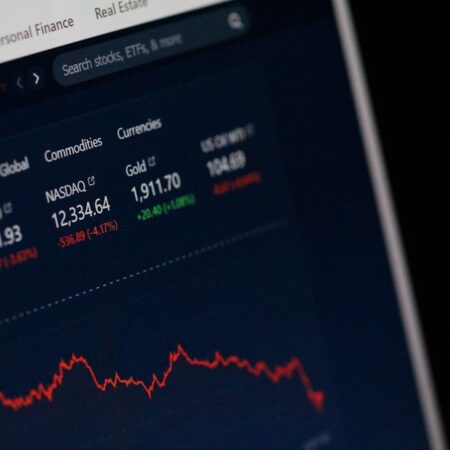
NEW YORK, April 3, 2026 — Good Friday. The U.S. equity market has been closed since 1:00 PM ET Thursday. The Non-Farm Payrolls report for March hit at 8:30 AM ET this morning into near-empty bond markets. The ISM Services PMI for March follows at 10:00 AM ET. By noon, bond markets also close for the holiday. Everything that has happened since Thursday’s 1 PM close — Trump’s “Operation Epic Fury” national address, the Iran-Oman Strait of Hormuz governance protocol, the IRGC’s naming of 18 U.S. tech companies as retaliation targets, Brent crude’s surge back toward $108, and now today’s NFP and ISM Services data — accumulates over the Easter weekend into a Monday April 6 opening bell that is already being described as the most event-compressed single market open of 2026. This is the PreMarket Daily Good Friday roundup: everything you need to know before Monday’s bell, in the order it matters.
The war: five weeks in, an expanded conflict, and a deadline that quietly expired
The U.S.-Iran war — “Operation Epic Fury” in Trump administration nomenclature — entered its 34th day on Thursday. Five weeks since the opening strikes on February 28, the conflict’s trajectory has followed none of the resolution timelines that either side publicly announced. Trump declared in early March that the war was “very complete, pretty much.” Iran’s Supreme Leader Khamenei has been killed, Iran’s navy has been largely destroyed (92% of large naval ships, per CENTCOM), its air force is “in ruins,” and its ballistic missile arsenal is “just about used up or beaten” in Trump’s own assessment. And yet: Brent crude is near $105. The Strait of Hormuz moves five vessels per day against a pre-war average of 138. U.S. gasoline prices have crossed $4 per gallon nationally. Consumer sentiment is at 53.3 — below the starting level of every U.S. recession since the Michigan index’s 1978 inception. The Dow is in correction territory. The Nasdaq is in correction. And Iran is drafting a protocol with Oman to institutionalise permanent governance rights over the world’s most critical energy chokepoint.
Wednesday night’s national address by Trump — projecting “two to three more weeks” of intensive strikes — extended the conflict timeline well beyond the April 6 deadline he had set for Iran to reopen Hormuz. That deadline expired Thursday without a formal acknowledgement from either side. Iran’s foreign ministry continues denying direct negotiations. Trump’s Truth Social posts continue to alternate between threatening “total obliteration” and claiming “great progress.” The market — which spent five weeks being whipsawed by each new diplomatic headline — has begun to price the ambiguity itself as a permanent condition rather than a temporary negotiating phase. That repricing is evident in the VIX’s sustained elevation above 25, Brent’s resistance to falling below $100 despite three separate waves of de-escalation optimism, and the 10-year yield’s persistence near 4.4% despite the growth data that would normally argue for significant rate-cut pricing. The VIX above 25 is the market’s honest quantification of an uncertainty that is not resolving.
The Hormuz protocol: the Easter weekend’s most important development for oil markets
Iran’s announcement Thursday of a bilateral protocol with Oman to “monitor transit” through the Strait of Hormuz is the development that matters most for Monday’s oil pricing. Iranian Deputy Foreign Minister Kazem Gharibabadi confirmed that Iran and Oman are co-drafting a mechanism under which vessel traffic through the strait “should be supervised and coordinated” between the two coastal states. Iran’s parliament has separately legislated transit tolls of up to $2 million per vessel — potentially $100 billion annually at pre-war vessel volumes. The Eurasia Group’s Gregory Brew describes permanent Iranian governance over Hormuz as a “colossal win” and “massive strategic win” for Tehran — more powerful than before the war. The physical oil market is already pricing this reality more accurately than paper futures: the Dubai physical benchmark is up approximately 76% from pre-war levels versus approximately 45% for paper Brent, because physical traders who must actually move crude cannot paper over the five-vessels-per-day throughput reality.
The Strategic Petroleum Reserve releases (400 million barrels, the largest in history) and Jones Act waivers (60 days) have been the primary tools preventing the full physical supply shock from transmitting into consumer prices at maximum velocity. As analysts have warned since late March, those tools lose their effectiveness in early-to-mid April. The Easter weekend is the boundary of that window. If Hormuz throughput remains near five vessels per day through next week — which is near-certain given that the Iran-Oman protocol has not yet been finalised, much less implemented as a reopening mechanism — the SPR release buffer begins to exhaust and physical market prices begin to dominate the paper market. That transition is the most important near-term oil market catalyst for energy sector investors, and it has received almost no attention compared to the daily Iran diplomatic headline cycle.
The week’s data scorecard — what each release told us
April’s first week produced one of the densest economic data sequences of the year. Here is the complete scorecard, with Monday’s open framing alongside:
Tuesday (March 31) — Consumer Confidence: Dropped to 88 from 91.2 in February, consistent with the Michigan Sentiment’s 53.3 deterioration and confirming that household economic anxiety is broadening. The Conference Board component most sensitive to Iran — future expectations for business conditions and employment — showed the steepest declines.
Tuesday (March 31) — JOLTs (February): Job openings of 6.882 million versus 6.918 million estimate — a slight miss that confirmed the labour market’s gradual cooling without signalling a sharp deterioration. The quits rate, which tracks voluntary job-leaving as a proxy for worker confidence, was the sub-component most closely watched for a wage-growth signal.
Wednesday (April 1) — ADP Employment (March): +62,000 private payrolls, above the 57,000 NFP consensus, with healthcare accounting for approximately 58,000 of the total. Structurally weak outside healthcare — ADP’s chief economist explicitly noted that healthcare gains are “low-paying jobs” that don’t support consumer spending.
Wednesday (April 1) — ISM Manufacturing PMI (March): Came in at approximately 52.5, holding in expansion territory, with the Prices Index significantly elevated (reflecting energy cost pass-through) and the Employment Index at 48.7 (contraction). The co-existence of expansionary orders with contractionary employment and elevated prices is a near-textbook stagflation signal.
Wednesday (April 1) — February Retail Sales: +0.6% versus the +0.5% consensus — a modest beat that reflected consumer spending patterns from before the Iran conflict’s full economic impact was felt (February retail surveys were conducted before the Hormuz closure’s second-order effects on fuel and food prices fully materialised).
Friday (April 3) — March NFP and ISM Services PMI: Covered in detail in PreMarket Daily’s dedicated NFP analysis published this morning. The two data points that complete the week’s picture but that the equity market cannot price until Monday.
Monday April 6 — the full picture of what the opening bell inherits
The Monday April 6 market open is the single most consequential session of the entire Iran conflict period for portfolio positioning. In the hours between Good Friday’s close and the 9:30 AM ET bell, the following unresolved variables will accumulate without any equity market release valve: the NFP’s labour market signal (absorbed by bonds today, repriced by equities Monday); the ISM Services PMI (same structure); the Iran-Oman Hormuz protocol (announced Thursday, not yet priced by equity markets); Trump’s 2–3 week strike timeline (Wednesday night address); the IRGC’s tech company targeting list; whatever Iran military developments occur over Easter; and the quiet expiry of the April 6 Hormuz deadline that Trump set in late March. That convergence of data, geopolitical signals, and calendar events into a single opening bell is without precedent in the conflict’s five-week history.
The market’s direction will be determined primarily by the Iran variable rather than the economic data. If the Easter weekend produces credible ceasefire signals — particularly if Iran’s president makes a formal statement of willingness to halt military operations with specific conditions — futures could rally sharply overnight Sunday and Monday’s open could gap significantly higher. If strikes intensify, new Iranian missile attacks occur, or the Hormuz protocol’s implications are more widely understood and bearish for post-war oil pricing, futures could open significantly lower. The NFP number and ISM Services data will be directionally subservient to the Iran signal: in a market driven by a geopolitical supply shock, economic data provides context but not catalyst. As April begins and the conflict enters its sixth week, that hierarchy of drivers has not changed — and until Hormuz reopens or a formal ceasefire is announced, it will not. PreMarket Daily will cover Monday’s open as it develops. Subscribe to our daily trading plan for real-time analysis before each session.
This article is published by PreMarket Daily for informational and educational purposes only. Nothing here constitutes financial advice, investment recommendations, or an offer to buy or sell any securities. Always consult a qualified financial professional before making investment decisions.