

NEW YORK — Wall Street is dark for Juneteenth, but the rest of the world’s markets kept moving Friday — and the most consequential signal of the session may be what is not happening to oil prices in the wake of a confirmed U.S.-Iran ceasefire deal.
Global Markets While Wall Street Sleeps
European and Asian markets traded through Friday without the anchor of U.S. price discovery, a condition that typically compresses volume and amplifies moves in either direction. The backdrop heading into the holiday weekend was one of cautious optimism — the U.S.-Iran ceasefire agreement removed one of the most significant macro overhangs of Q2 2026, but markets have a habit of selling the news on geopolitical resolutions after buying the rumor for weeks.
Asian indices closed their Friday sessions with mixed results as the Iran deal filtered through overnight positioning. European bourses opened with modest gains before fading, with energy stocks caught between a slightly firmer oil print and the longer-term demand question that a Middle East peace deal raises. The FTSE 100’s energy-heavy composition made London the most exposed major European index to any ceasefire-related repricing, while the DAX and CAC 40 — both more tilted toward industrials and financials — held steadier through the morning session.
The structural point here is that thin holiday volumes in the U.S. bond market — also closed for Juneteenth — removed a critical pricing signal for global rate expectations. Without a Treasury benchmark to trade against, European fixed income markets were effectively navigating without a compass. That creates conditions where moves can overshoot in either direction, and Monday’s reopening often produces a snap-back to where the full market consensus actually sits.
The Ceasefire Discount — What the Oil Market Is Actually Saying
WTI crude edged up 0.65% to $77.10 per barrel on Friday while Brent added just 0.12% to $79.95. Those are not the numbers of a market celebrating peace in the Middle East — they are the numbers of a market that has already digested that outcome and is now wrestling with what comes next on the supply side.
The Iran deal, if it holds, theoretically adds Iranian barrels back into a global market that OPEC+ has been carefully managing for two years. That overhang is real. The counterargument — and it deserves serious weight — is that Iranian production infrastructure has deteriorated significantly under sanctions, and any meaningful supply addition is likely 12 to 18 months away at minimum. The oil market may actually be right to yawn.
Silver’s 2.13% decline to $64.26 per troy ounce is the more interesting data point. Silver carries a dual identity as both a precious metal and an industrial input, and its sharper drop relative to gold suggests the market is unwinding defensive positioning rather than making a confident statement about industrial demand. Gold’s smaller decline reinforces that read — the risk-premium strip-out is underway, but it is not yet a rout.
For context on what drove the week’s setup, see our Thursday analysis: Can a Hormuz Deal and an Intel Chip Win Hold This Rally Together? — the thesis there was that both catalysts needed to hold simultaneously to sustain momentum into the long weekend. One has held. The other is being tested.
Crypto and Commodities — The Markets That Never Close
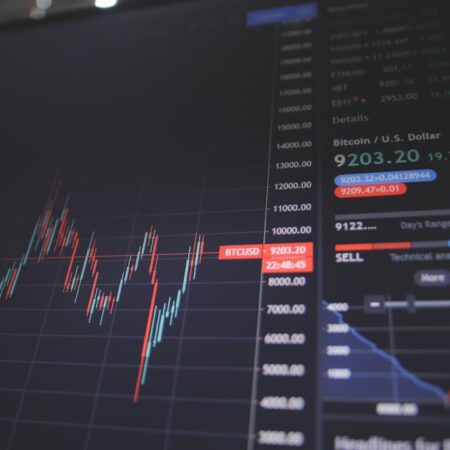
Bitcoin’s slide below $63,000 in Friday’s holiday-thinned session continued what has been a week of fading momentum after a brief bounce attempt. Crypto markets, which often function as a real-time proxy for broader risk appetite when traditional markets are closed, are sending a cautious signal heading into the weekend. The level to watch is whether Bitcoin can stabilize above $62,500 — a failure there historically precedes wider risk-off moves when equity markets reopen.
The relationship between crypto and the Iran ceasefire narrative is indirect but not irrelevant. Geopolitical resolution tends to reduce the appeal of alternative stores of value, and Bitcoin — whatever its long-term narrative — still trades with a meaningful correlation to risk sentiment in short-duration windows. A ceasefire that calms macro anxiety could be a modest headwind for crypto over the next week, even if the longer-term structural case remains intact.
Gold at $4,168.65 and silver at $64.26 complete a commodity picture that reads as follows: the era of pure fear-driven precious metals buying is moderating, but it is not reversing. The $4,100 level in gold is the line that separates an orderly correction from a more significant trend break. Traders should have that number circled for Monday morning.
For the broader tech and semiconductor context that intersected with this week’s geopolitical moves, our earlier analysis covers the ground: Is Intel’s 9% Gap-Up the Start of a Real Semiconductor Comeback?
What History Says About the First Session Back
Juneteenth became a federal holiday in 2021, giving us only five years of post-holiday trading data — a small sample, but directionally informative. The S&P 500 has posted gains in three of the four completed Juneteenth return sessions, with the average first-day move running close to flat with a slight positive bias. The two negative return years — 2022 and 2025 — both featured elevated macro uncertainty heading into the long weekend, which is relevant context given where rate expectations and geopolitical positioning currently sit.
The honest caveat is that five data points do not constitute a pattern. What the data does suggest is that Juneteenth closures do not systematically produce either a relief rally or a sell-the-news reaction on Monday. The return session tends to track whatever macro narrative was dominant before the holiday — in this case, that narrative is a ceasefire deal that may already be fully priced and a rate environment where Fed Chair Warsh has signaled rates holding near 4.5%.
Holiday-shortened weeks also tend to compress volatility in the sessions immediately preceding and following the closure. If that pattern holds, Monday’s open may be quieter than the geopolitical news flow would suggest — though low-volatility opens have a way of resolving sharply once institutional order flow reengages after a long weekend.
What to Watch at Monday’s Open
The most important single input for Monday morning will be whether the Iran ceasefire terms hold over the weekend news cycle. Any sign of deterioration or re-escalation — particularly involving Strait of Hormuz shipping lanes — would reverse the commodity moves seen Friday and could pressure equity futures at the open. Conversely, confirmation of the deal’s durability would likely support the modest risk-on setup that closed out Thursday’s session.
S&P 500 futures will be the first read on how U.S. traders assess the weekend’s developments. Watch the futures open Sunday evening — any gap of more than 0.5% in either direction from Thursday’s close will indicate that the holiday period produced price discovery that the cash market now needs to catch up to. Thursday’s close should be treated as the baseline; futures trading Sunday night is the first real signal.
The Fed calendar for next week is light, but any comments from Fed officials in the Monday-Tuesday window could reset rate expectations quickly, particularly given that Warsh’s recent press conference shifted the market’s read on the rate path more than most anticipated. A hawkish off-script comment over a holiday weekend — rare but not unprecedented — would move markets disproportionately given thin positioning.
| Level / Event | Value | Signal |
|---|---|---|
| Gold spot floor | $4,100 | Break below signals risk-premium unwind accelerating beyond orderly correction territory |
| Bitcoin support | $62,500 | Failure here historically precedes broader risk-off moves when equity markets reopen Monday |
| WTI crude key level | $75.00 | A drop through $75 would signal the ceasefire Iran-supply overhang trade is being priced in full |
| S&P 500 futures gap threshold | ±0.5% | Sunday night futures move beyond this range signals weekend news flow has changed the Monday setup |
| Iran ceasefire status | Confirmed | Any re-escalation over the weekend reverses Friday’s commodity moves and pressures equity futures at the open |
The Setup Heading Into Monday
Holiday closures have a way of obscuring what the market is actually doing. The 24/7 commodity and crypto signals available on Juneteenth point to a market that is processing the Iran deal rationally — selling the risk premium that built up during months of Middle East tension, while not making aggressive directional bets in either direction without U.S. institutional participation. That is a healthy digestion pattern, not a warning sign.
The more interesting question for Monday is whether the ceasefire deal creates space for a re-rating of the energy sector’s earnings outlook or simply gets absorbed as a one-day event. Energy stocks had been trading with a geopolitical bid for much of Q2. That bid is now at risk. If oil holds above $75 through next week, the sector can argue the demand story remains intact. If it breaks lower, the Q2 earnings revision cycle for energy names could turn negative quickly.
Equities more broadly enter Monday with the market carrying a week of gains from the Intel chip news and the geopolitical resolution — two catalysts that are now largely reflected in prices. The question traders should be asking is not what has happened, but what the next catalyst is. With the Fed on hold, earnings season still weeks away, and the macro calendar light in the immediate term, the market may be entering a period where it needs a new story. Holiday periods are often where those stories begin to form quietly, in futures markets and global bond flows, before they arrive loudly at the cash open.
For a fuller picture of what the tech sector was doing heading into this long weekend, see: Can Tech Carry This Rally Through a Long Juneteenth Weekend?
This article is published by PreMarket Daily for informational purposes only. Nothing here constitutes financial advice, investment recommendations, or an offer to buy or sell any securities. Always consult a qualified financial professional before making investment decisions.




No Comment! Be the first one.