

Overview:
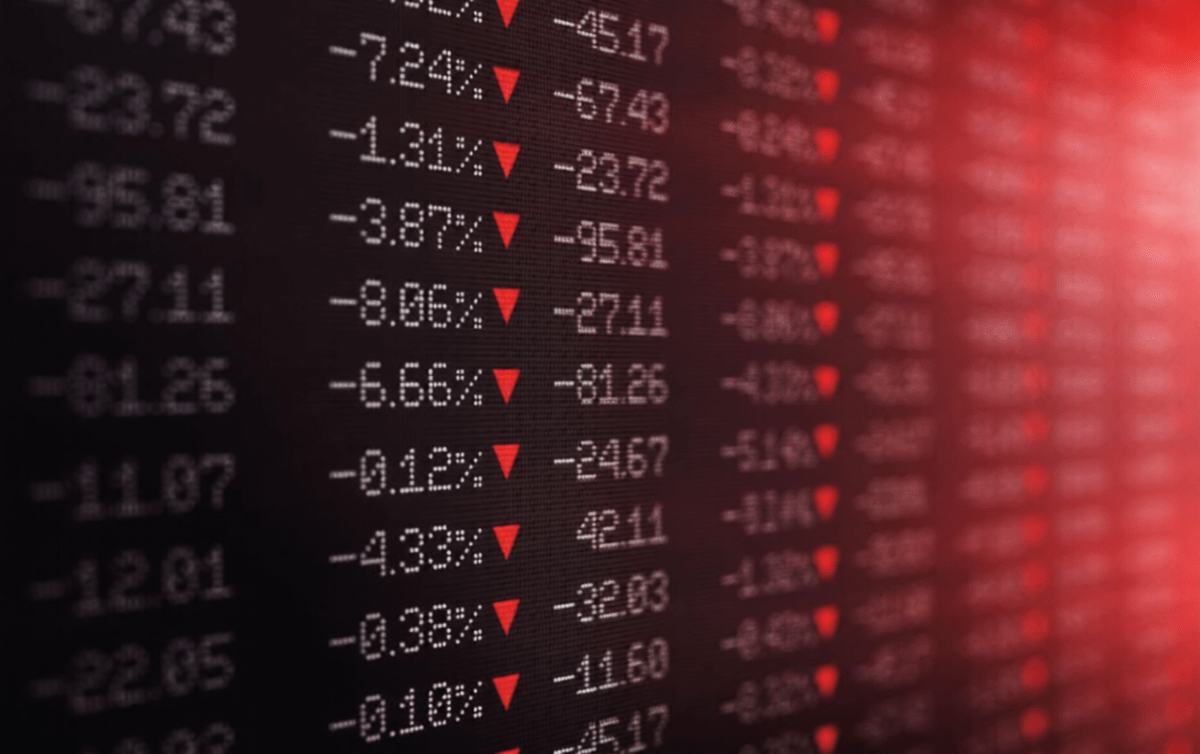
Nasdaq 100 futures are down 1.5% at 23,831.50 as two simultaneous pressures hit technology stocks Thursday: Trump's "Operation Epic Fury" national address reversed Wednesday's Iran deal rally by projecting 2–3 more weeks of intensive strikes, sending Brent back to $106+; and Iran's IRGC published a list naming Nvidia, Apple, Microsoft, and Alphabet as "legitimate retaliation targets." Nvidia, Alphabet, Micron, Tesla, and Intel are each down 2–3% premarket. The VIX is back at 26.52 (+8%). Wednesday's S&P 500 "best day since May" is fully erased in overnight trading.
NEW YORK, April 2, 2026 — Technology stocks are Thursday’s premarket underperformers by a wide margin, with Nasdaq 100 futures sinking 1.5% to 23,831.50 as two overlapping pressures simultaneously strike the sector. The first is the direct reversal of Wednesday’s Iran deal optimism: Trump’s April 1 national address on “Operation Epic Fury” projected 2–3 more weeks of intensive military strikes, driving oil back above $104 on Brent and restoring the rate hike fear that had compressed technology valuations throughout March. The second is structurally more alarming: Iran’s Islamic Revolutionary Guard Corps (IRGC) published a warning naming 18 U.S. technology companies — including Nvidia (NVDA), Apple (AAPL), Microsoft (MSFT), and Alphabet (GOOGL) — as “legitimate targets” for retaliation against U.S. and Israeli strikes. Nvidia, Alphabet, Micron Technology (MU), Tesla (TSLA), and Intel (INTC) are each down 2–3% in premarket trading. S&P 500 futures are at 6,540.25, down 1.17%. The VIX is back above 26, up 8.07% on the session.
Iran’s IRGC names 18 U.S. tech companies — what the threat means for markets
The IRGC’s publication of a list of 18 U.S. technology companies identified as “legitimate targets” for retaliation is analytically unprecedented in the current conflict: it is the first time Iran has explicitly named specific American corporate entities — rather than military or government targets — as potential objectives. The listed companies include Nvidia, Apple, Microsoft, and Alphabet — four of the five largest companies in the S&P 500 by market capitalisation, and collectively representing roughly $12–13 trillion in combined equity value. The specific inclusion of Nvidia is most directly actionable as a market signal, given Nvidia’s centrality to the AI infrastructure buildout and the pre-existing concerns about U.S. export controls on advanced chips flowing to adversarial states.
The market’s interpretation of the IRGC threat is not that Iran has the capability to conduct direct cyberattacks or physical attacks on Silicon Valley campuses. It is that the naming of these companies formalises Iran’s posture toward U.S. commercial infrastructure as a legitimate wartime target — a posture that invites state-sponsored cyber operations against these companies’ cloud infrastructure, supply chains, and intellectual property. Iran has historically maintained one of the world’s most capable state-sponsored cyber operations (Charming Kitten, APT33, and associated groups), and the IRGC’s public enumeration of 18 technology targets should be read as a signal that offensive cyber operations against those companies’ assets may be authorised or in progress. For risk managers at large tech firms, the IRGC’s list is the most explicit threat to U.S. corporate cyber infrastructure the war has produced — and it requires operational responses that have real-time cost implications regardless of whether any attack materialises.
Trump’s “Stone Ages” speech — what changed between Wednesday’s open and Thursday’s premarket
Wednesday, April 1 had been the S&P 500’s best day since May — up 0.72% to close at 6,575.32 — driven entirely by Iran de-escalation optimism from the WSJ’s reporting that Trump was willing to end operations without requiring Hormuz to reopen. That narrative lasted precisely until Trump’s 9 PM ET address to the nation, which delivered a set of talking points that directly contradicted the WSJ’s diplomatic framing. Rather than signalling flexibility, Trump declared that the U.S. would hit Iran “extremely hard over the next two to three weeks,” that military objectives were “nearing completion” but not yet complete, and that countries dependent on the Strait of Hormuz should “go take it” themselves. He made no reference to the April 6 deadline. He offered no ceasefire terms. Iran’s foreign ministry called his claim that Iran had asked for a ceasefire “false and baseless.”
For technology stocks specifically, the speech’s impact operates through two distinct channels simultaneously. The rate channel: Brent surging back to $106+ overnight restores the oil-driven inflation pressure that had pushed rate hike probability above 50% last week and driven the 30-year Treasury yield briefly through 5%. The discount rate that long-duration growth equities are valued against rises with the rate hike probability, compressing tech multiples regardless of whether any actual hike materialises. The second channel is the IRGC targeting list: the specific naming of Nvidia, Apple, Microsoft, and Alphabet as retaliation targets creates a company-specific risk premium — the probability-weighted cost of a major cyberattack on these companies’ infrastructure — that was not present in yesterday’s market pricing.
Nvidia specifically — the AI semiconductor caught between the IRGC list and export control risk
Nvidia (NASDAQ: NVDA) is the most symbolically and economically significant name on the IRGC’s list. As the world’s dominant AI GPU supplier, Nvidia is already subject to U.S. export controls restricting sales to China and other adversarial states — controls that have created a complex compliance environment for the company’s sales operations globally. The IRGC’s explicit naming of Nvidia as a retaliation target adds a new layer of risk: if Iranian-linked cyber actors target Nvidia’s infrastructure, supply chain, or IP, the disruption could affect the production and delivery timelines for H100 and B200 GPU systems that are the backbone of the current AI infrastructure buildout. Any Nvidia-specific production or delivery disruption would ripple through data centre construction timelines at Microsoft, Google, Amazon, and Meta — creating second-order technology sector impacts beyond the direct Nvidia share price move.
An additional Nvidia-specific concern from Wednesday’s earnings season: Yahoo Finance’s market coverage noted that helium — a critical input for semiconductor manufacturing, produced in large quantities in the Gulf region — “could potentially turn into a bottleneck for the entire AI story” as the Hormuz closure restricts Gulf helium exports. Economist Andreas Steno Larsen of Steno Research made that observation to Yahoo Finance, highlighting that helium supply is “key in the production of semiconductors” and that the Hormuz stoppage creates a genuine production-level input risk for chip manufacturing that is separate from and additional to the demand and valuation risks already embedded in Nvidia’s current valuation at approximately 25x forward earnings.
IGV down 23% YTD — what the software sector’s 2026 performance reveals
The iShares Expanded Tech-Software ETF (IGV) — which tracks enterprise software and SaaS companies — has been down approximately 23% year-to-date heading into today’s session, representing one of the largest sector drawdowns in the current conflict. That decline reflects two compounding forces: the direct discount rate pressure from rising yields (long-duration SaaS companies are particularly sensitive to rate hike pricing), and the structural AI disruption narrative that has been building since before the conflict began — the thesis that generative AI tools reduce enterprise software’s total addressable market by enabling users to accomplish more with fewer licensed seats. The IRGC’s tech targeting list does not change the fundamental software sector thesis, but it adds a geopolitical risk premium that neither the AI disruption narrative nor the rate-sensitivity framework had previously required.
For context on how to navigate sessions like today — where premarket technology declines are driven by geopolitical tail risks rather than fundamental data — PreMarket Daily’s premarket movers guide and the VIX explainer provide the analytical framework for separating signal from noise in high-volatility premarket sessions. The VIX at 26.52 — up 8.07% on the session — confirms that institutional risk aversion has re-elevated sharply from Wednesday’s brief optimism window back toward the fear levels that characterised most of March.
This article is published by PreMarket Daily for informational and educational purposes only. Nothing here constitutes financial advice, investment recommendations, or an offer to buy or sell any securities. Always consult a qualified financial professional before making investment decisions.