
Overview:
Islamabad peace talks collapsed after Iran demanded nuclear programme rights, war reparations, Lebanon ceasefire, and permanent Hormuz transit control. Trump ordered a US Navy blockade of Iranian port traffic effective 10 AM ET Monday. WTI +8.1% to $104.38. Brent +7.8% to $102.64. European nat gas +18%. S&P 500 futures –0.6% (pared from –1.1%). Dow –255 pts. Goldman Sachs Q1 earnings at 7:30 AM ET (EPS consensus $16.35–$16.86, revenue ~$17B). Goldman's own commodity desk: $100+ Brent average through 2026, $120 Q3 in extended disruption. IEA SPR buffers near limits. Bank earnings: JPM/WFC/Citi Tuesday. Fed blackout begins Saturday April 18.
| Instrument | Level | Change | Driver |
|---|---|---|---|
| S&P 500 Futures | ~6,796 | –0.60% | Blockade re-escalation |
| Dow Futures | ~47,930 | –255 pts / –0.53% | Pared from –517 Sunday open |
| Nasdaq 100 Futures | ~24,870 | –0.70% | Tech risk-off |
| WTI Crude | $104.38 | +8.10% | Hormuz blockade |
| Brent Crude | $102.64 | +7.80% | Islamabad talks collapse |
| 2Y Treasury Yield | 3.82% | +3 bps | Inflation re-pricing |
| USD Index | — | +0.30% | Safe-haven bid |
NEW YORK, April 13, 2026. The market’s best week since November is reversing at the open. US stock futures tumbled Sunday evening after President Trump announced a US Navy blockade of the Strait of Hormuz, responding to the collapse of weekend peace talks in Islamabad between Washington and Tehran. Vice President JD Vance left Pakistan without a deal, citing Iran’s insistence on nuclear programme rights as the non-negotiable breaking point. WTI crude surged 8.1% to $104.38 a barrel. Brent jumped 7.8% toward $103. European gas futures spiked as much as 18%. S&P 500 futures fell as far as –1.1% before recovering to –0.6% as the pre-market interpreted the blockade as a negotiation tactic rather than a permanent escalation. Goldman Sachs reports Q1 2026 earnings at 7:30 AM ET — the first major earnings of the bank season and the one print capable of providing enough fundamental ballast to limit today’s opening damage.
How Islamabad collapsed — and what Iran actually demanded
VP Vance arrived in Islamabad Saturday leading a delegation that included special envoy Steve Witkoff and Jared Kushner — the highest-level direct US-Iran engagement since Operation Epic Fury began February 28. The talks ended without agreement in under 48 hours. Iran’s demands, as described by US officials, included four positions the Trump administration characterised as incompatible with any acceptable settlement: permanent Iranian administrative rights over Strait of Hormuz transit, financial war reparations, a comprehensive regional ceasefire explicitly encompassing Lebanon and Hezbollah operations, and preservation of Iran’s nuclear programme. Vance stated publicly that Iran’s “unwillingness to stop the pursuit of nuclear weapons” was the definitive sticking point. The Wall Street Journal reported the White House was also considering resuming limited military strikes on Iran.
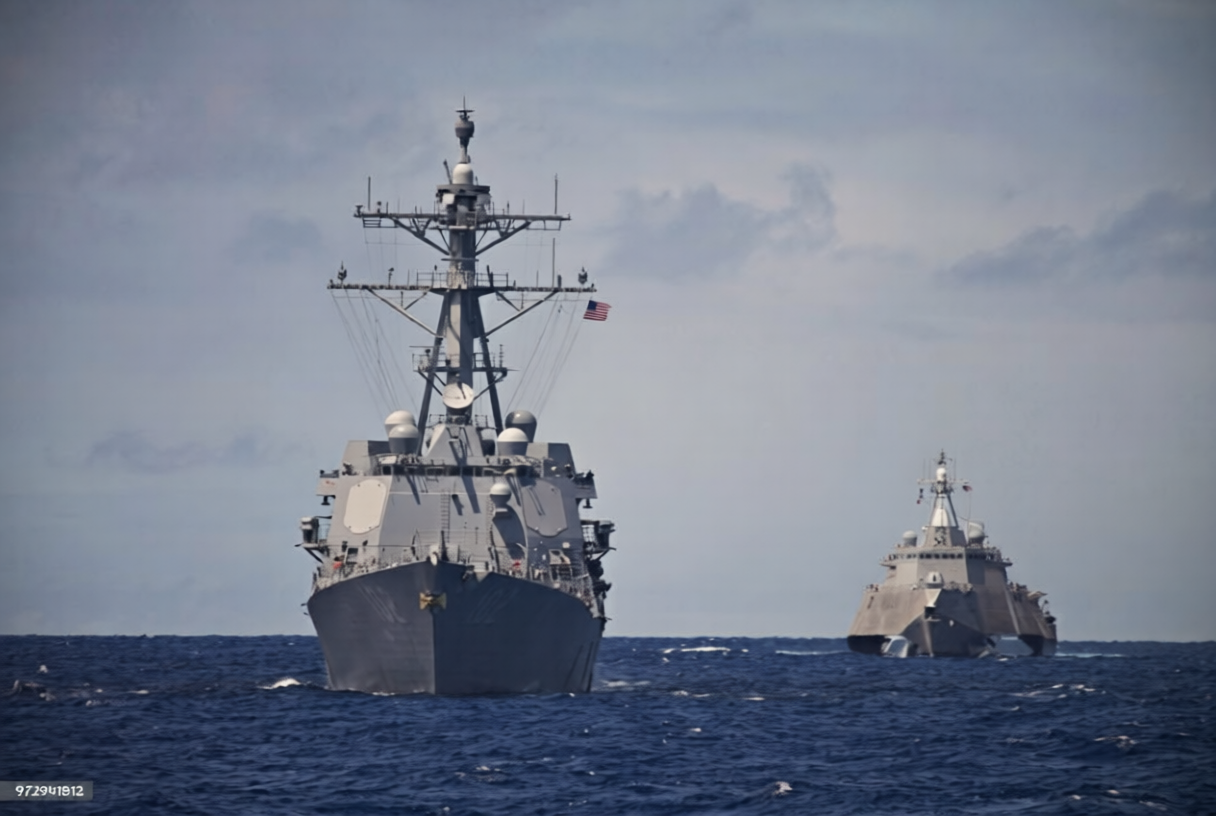
Trump posted the blockade order on Truth Social within hours: “Effective immediately, the United States Navy, the Finest in the World, will begin the process of BLOCKADING any and all Ships trying to enter, or leave, the Strait of Hormuz.” CENTCOM confirmed the blockade would begin at 10 AM ET Monday and applies specifically to vessels entering and exiting Iranian ports — with an explicit carve-out for ships transiting to non-Iranian Gulf ports including the UAE, Qatar, and Kuwait. That distinction — Iranian ports vs. the full Strait — is the most important analytical detail of the morning. Futures markets reacted to the announcement in real time, with Dow futures opening –517 points before recovering as traders absorbed the carve-out’s implications.
Goldman Sachs at 7:30 AM — the earnings tape that could change the morning
Goldman Sachs (NYSE: GS) reports Q1 2026 at 7:30 AM ET. Consensus: EPS $16.35–$16.86 (+16% YoY from Q1 2025’s $14.12), revenue $16.66–$17.40 billion. Options markets are pricing a 5.8% implied move — more than double Goldman’s historical earnings-day average of 2.6%, reflecting both the Iran war trading revenue opportunity and the simultaneous blockade shock. The case for a beat is straightforward: the war produced five weeks of extraordinary FICC volatility — WTI swung from $67 to $115.80 and then crashed 16.41% in a single session — generating the kind of commodity, rates, and currency flow that historically produces Goldman’s strongest trading quarters. Alphastreet’s bank earnings preview flagged global Q1 M&A at 24 mega-deals ($10B+) and 40 deals above $5 billion — a pipeline that should translate into material advisory fee revenue for Goldman’s #1-ranked investment banking franchise.
Three guidance elements carry maximum market weight at the 7:30 AM call. First: FICC trading revenue and any forward colour on whether the blockade’s resumed commodity volatility is already generating Q2 flow. Second: IB pipeline durability — whether corporate deal confidence is holding under renewed geopolitical uncertainty or pausing. Third: credit provision language — any signal of consumer or corporate stress building reserve requirements beyond Q1. Goldman’s print sets the tone for every subsequent bank earnings call this week — JPMorgan, Wells Fargo, and Citi all report Tuesday before the open.
Goldman’s own $100+ Brent scenario is now the base case
The sharpest irony of Monday morning: Goldman Sachs’ own commodity research desk — led by analyst Daan Struyven — published the pre-positioning note of the ceasefire period on Thursday, warning that Brent would average above $100/barrel through 2026 if Hormuz remained mostly shut for another month, with $120 projected for Q3 and $115 for Q4 in an extended disruption scenario. That scenario, framed as a tail risk when the ceasefire was in force, is now becoming the market’s base case in real time as Goldman’s Q1 report hits the wire. WoodMac estimates that $100 average Brent slows global economic growth to 1.7% against a pre-war forecast of 2.5%.
CoinDesk’s analysis of the IEA SPR release situation puts the risk in stark terms: the coordinated emergency strategic petroleum reserve releases have been offsetting approximately 4.5–5 million barrels per day of Hormuz-disrupted supply. Those buffers are approaching operational limits in coming weeks. If the blockade prevents Hormuz normalisation, the supply gap could widen to 10–11 million barrels per day — a number without precedent in global energy market history. Saudi Arabia partially offsets this: Trading Economics reported the kingdom restored full East-West pipeline capacity and Manifa field output over the weekend, though those volumes compensate for Saudi-specific production disruptions rather than the full Hormuz shortfall. The VIX, which had retreated toward 20 during the ceasefire, will be closely watched at the open for whether the blockade re-anchors volatility above 25.
Sector and stock implications at Monday’s open
The blockade creates a clear sector split. Energy winners: ExxonMobil (XOM), Chevron (CVX), ConocoPhillips (COP), and the XLE ETF benefit directly from $104 WTI — every $10/barrel sustained crude increase adds approximately 15–20% to integrated oil company earnings annually. Defence contractors — Lockheed Martin (LMT, +30% YTD), Raytheon (RTX), Northrop Grumman (NOC) — receive renewed geopolitical premium as extended US military engagement replaces the ceasefire’s drawdown narrative. Tanker operators (Frontline, Nordic American Tankers) see extraordinary freight rates resume under a blockade that keeps the IRGC and US Navy simultaneously active in transit lanes.
Losers: Airlines face the most acute near-term pressure. Delta Air Lines (DAL) guided Q2 on a $4.30/gallon fuel assumption just five days ago — $104 WTI implies jet fuel closer to $5/gallon, putting every carrier’s Q2 guide in question before they have reported it. Consumer discretionary stocks face a second-order headwind as $4+ gasoline returns nationally, reviving the spending pressure the ceasefire’s $94 oil had briefly relieved. For the Fed, $104 WTI means April CPI — releasing May 13 — will land as the second consecutive month of energy-driven hot inflation, keeping the hawkish rate posture embedded in Wednesday’s FOMC minutes in force through at least June. Technology’s reaction is the most analytically important signal: if AVGO, NVDA, and TSM hold relative to the broader selloff, the “AI infrastructure immune to Iran war” thesis survives; if technology sells off in sympathy, the relief rally’s technical structure is more comprehensively broken. PreMarket Daily’s full daily plan covers every session catalyst — today’s primary watchpoints are Goldman’s 7:30 AM tape and the 10 AM blockade implementation.
This article is published by PreMarket Daily for informational and educational purposes only. Nothing here constitutes financial advice, investment recommendations, or an offer to buy or sell any securities. Always consult a qualified financial professional before making investment decisions.