
Overview:
Alcoa (AA) surged more than 9% in early trade — the sharpest single-session move among large-cap stocks at the open — after Iranian strikes hit UAE and Bahrain aluminum smelters, driving aluminum prices up more than 4.5%. The S&P 500 opened Monday's session at approximately 6,421, gaining 0.82% from Friday's closing level of 6,368.85, as Brent crude rose 3.5% to $116.50 and WTI climbed 2% to $101.70. ExxonMobil (XOM) traded at $170.99 — up 3.36% and within cents of its all-time high of $171.23 —
NEW YORK, March 30, 2026 — The S&P 500 rose to 6,421 points on March 30, 2026, gaining 0.82% from the previous session, as Wall Street opened a holiday-shortened week in a cautiously optimistic mood — a tentative rebound from a bruising Friday that left most major indexes at or near multi-month lows. The Dow Jones Industrial Average traded at 45,300, up 0.30%, while the Nasdaq hovered near the flatline at 20,939 and the VIX eased to 30.43 as gold extended its rally to $4,576 per ounce. WTI crude commanded $102.61 per barrel at the open, adding to an already historic commodity surge driven by a fifth consecutive week of conflict in the Middle East.
Friday’s session had closed painfully: the Dow fell 793 points, or 1.73%, to 45,166.64; the S&P 500 lost 1.67% to end at a seven-month low of 6,368.85; and the Nasdaq Composite dropped 2.15% to settle at 20,948.36. Monday’s opening provided a degree of relief, but the fundamental backdrop remained fraught. President Donald Trump on Monday threatened to “obliterate” Iran’s energy infrastructure if a deal between the two countries is not reached quickly.
Opening bell standout mover: Alcoa Corporation (NYSE: AA)
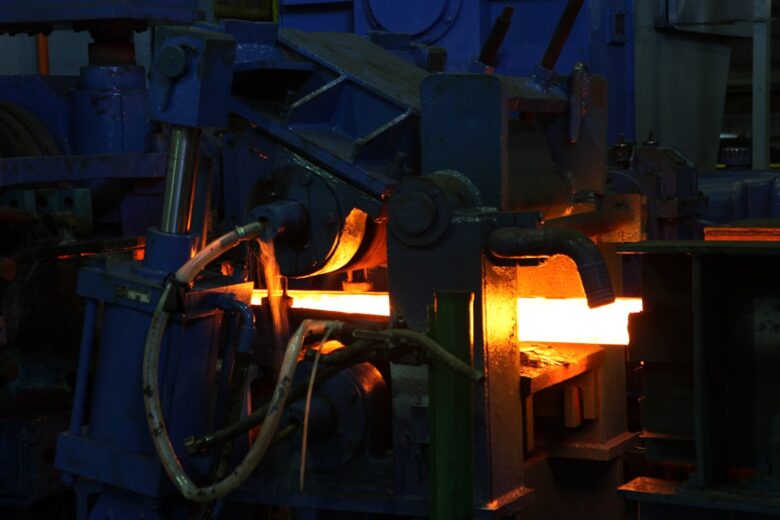
Alcoa Corporation (NYSE: AA) rallied more than 9% at the open as aluminum prices surged more than 4.5% after critical infrastructure for the metal in the Middle East was hit by Iranian missile strikes. The catalyst was direct and supply-chain-specific: Iran strikes on UAE and Bahrain aluminum smelters sparked supply fears, surging aluminum prices and lifting Alcoa 8% in premarket. By the time regular trading commenced, the move had extended further, making Alcoa the clearest catalyst-driven gainer at the opening bell among large-cap U.S. stocks.
Aluminum spiked on Monday after Iranian strikes disrupted key Middle East production facilities over the weekend, with investors bracing for further supply and logistics constraints. For Alcoa, a Pittsburgh-based integrated producer spanning bauxite mining, alumina refining, and primary aluminum smelting, the disruption to rival regional capacity translates directly into pricing power. In 2025, Alcoa’s revenue was $12.83 billion, an increase of 7.87% compared to the previous year, while earnings were $1.14 billion, an increase of 1,937.50%.
Alcoa Corporation is scheduled to release its next earnings report on April 16, 2026. Q4 2025 earnings came in at $1.26 per share against a consensus estimate of $0.93 — a 36.10% beat — while the estimated earnings for Q1 2026 stand at $1.43 per share. Monday’s price action places Alcoa well within striking distance of the multi-year technical resistance near its 52-week high of $68.40, a level that analysts at Citi had already flagged with a March 16 price target raise to $76 from $54.
Volume and price action analysis
Energy sector leads; XOM at all-time high
As of March 30, 2026, ExxonMobil (XOM) was trading at $170.99, with a previous close of $165.43, and the stock fluctuated within a day range of $164.80 to $171.23 — the latter representing its all-time high. The move reflects a +3.36% single-session gain and a year-to-date advance of more than 42%, according to TradingView data. Oil prices rose as fears grew that the Iran conflict could disrupt flows through the Strait of Hormuz, a major global oil shipping route, pushing energy stocks higher, with investors focusing on oil majors Exxon Mobil (XOM) and Chevron (CVX) as potential beneficiaries.
The energy move drew its immediate catalyst from the weekend’s diplomatic and military developments. Brent crude, the global oil benchmark, rose 3.5% to $116.50 a barrel, while WTI, the U.S. benchmark, climbed 2% to $101.70 a barrel. Trump told the Financial Times in an interview published Sunday that he wants to “take the oil in Iran” and could seize Kharg Island, which handles about 90% of the country’s oil exports. That remark, combined with a Truth Social post warning of infrastructure obliteration if the Strait of Hormuz is not reopened, gave crude its sharpest single-day impulse in weeks. For a full context of the energy sector’s remarkable 2026 performance, see Sector review, week of March 28, 2026: Energy leads with +6.12%.
Shipping traffic through the Strait of Hormuz has virtually ground to a halt since the U.S. and Israel launched strikes against Iran on February 28. Kharg Island is relatively small — about 8 kilometres long and 4–5 kilometres wide — but it hosts extensive infrastructure, including storage tanks, pipelines, and offshore loading terminals. The island’s terminals can load roughly 1.3–1.6 million barrels of crude per day. The geopolitical complexity of a potential U.S. ground operation on Kharg continued to lend a floor to energy prices at the open.
Energy Select Sector SPDR Fund (XLE) has risen 34% over the past year with $37.9 billion in assets, with ExxonMobil and Chevron comprising over 40% of the portfolio. The sector’s outperformance relative to the broader market has been consistent since the Iran conflict began, and Monday’s open extended that divergence further. For further reading on XOM’s historic run, see ExxonMobil (XOM) deep dive, March 28, 2026: Up 39% YTD as Iran war drives XOM to all-time high of $171.32.
CrowdStrike (CRWD): Wolfe upgrade on Anthropic AI catalyst
Among technology movers, Wolfe Research upgraded CrowdStrike Holdings Inc. to “outperform” from “peer perform” on Monday, setting a $450 price target representing 21.8% upside from the stock’s $369.58 price, citing an anticipated Anthropic model release as a potential catalyst for accelerated security spending, sending shares up by approximately 3% in premarket trade.
“Anthropic’s upcoming AI model release with cybersecurity capabilities has the potential to ignite a machine speed cyberwar the likes of which we have never seen,” Wolfe Research analyst Joshua Tilton said Monday in a note to clients. The upgrade came after CRWD shares fell roughly 6% following leaked news of an impending Anthropic model called Mythos, which reportedly carries significantly stronger cybersecurity capabilities than prior releases. The stock is down 21% year-to-date compared to the IGV’s 27% decline. Morgan Stanley also named CrowdStrike as a top pick on Monday, adding a second institutional endorsement to the day’s price action.
Broader market breadth at the open
Stocks in the technology sector were mostly higher premarket after their sharp losses from Friday pressured the Nasdaq into its lowest in seven months, with Nvidia, Amazon, and Microsoft gaining nearly 1%. Energy prices rose further after Houthi action threatened exports from the Red Sea, while President Trump delivered more threats to Iran. Bond yields eased from peaks in a sign that growth concerns from energy shortages are being considered in tandem with inflationary risks, supporting equities that have been pressured by higher credit costs.
Sector rotation has been evident in recent sessions: energy and materials outperformed on oil strength, while financials showed mixed moves as bond yields eased slightly from recent peaks. The 10-year Treasury yield stood at 4.36%, off its recent high of 4.44%, providing measured relief for rate-sensitive growth equities. Longer-term perspective shows the S&P 500 still up around 14% from a year earlier despite the 2026 pullback from January highs near 7,000.
What to watch in the first hour
Investors entered Monday’s session with a dense matrix of variables to monitor in the opening 60 minutes. The most immediate was the tone of geopolitical developments from Washington and Tehran. Iran contradicted Trump’s claims that it had agreed to “most of” the U.S.’ 15-point list of demands to end the war, calling the proposal “unrealistic.” The diplomatic dissonance, which Wells Fargo analyst Paul Christopher described as having “dismayed investors” in recent sessions, left crude prices volatile and headline risk elevated throughout the first hour.
Federal Reserve Chair Jerome Powell is scheduled to participate in a moderated discussion today with Harvard University’s Principles of Economics class. Powell will not be giving a formal policy speech, but investors and analysts will be watching closely for any hints on the Fed’s next moves. With the Iran war having elevated energy prices and rekindled inflation concerns, any commentary from Powell on the policy path will attract close scrutiny. For the full context of the Fed’s dilemma, see Powell speaks Monday as rate hike probability crosses 50% for the first time.
The March U.S. Jobs Report (Nonfarm Payrolls) is due on Friday, although markets will be closed for the Good Friday holiday. Some of the most closely watched corporate earnings include Nike (NKE) and McCormick & Company (MKC), both scheduled to report on Tuesday. Nike’s report will be particularly scrutinised given the consumer spending backdrop and import cost pressures tied to oil. Full consensus expectations — Nike EPS of $0.29 and NFP forecast at +57K — are detailed in Week ahead, March 30, 2026: Nike EPS consensus $0.29, NFP +57K forecast, and a Good Friday close.
On the commodity side, the trajectory of Brent crude relative to the $116-$120 band will remain the single most-watched variable for materials and energy names. Asia is the first continent to feel the effects of depleting oil stocks since oil shipments typically reach there first from the Middle East. Africa and Europe will likely be more impacted by April, a JPMorgan report warned. The broadening global impact of the supply shock adds a macro complexity that extends well beyond the opening session.
In the aluminum sub-sector, the duration and extent of Iranian-inflicted damage to UAE and Bahrain smelting capacity will determine whether Alcoa’s opening spike can be sustained or whether it partially retraces as damage assessments become clearer through the trading day. The conflict between the U.S.-Israel and Iran has expanded across the region, raising risks to energy and infrastructure, and sending crude oil prices surging. The number and scale of affected facilities will be the key data point for materials-sector traders in the first hour.
Volume patterns at the open will also attract scrutiny. Dollar volume for XOM stood at $5.19 billion — indicating heavyweight institutional participation — suggesting that the energy major’s move to its all-time high is not thin-market noise but rather a broad-based repositioning by institutional participants seeking commodity-linked exposure in a conflict-driven environment.
Monday’s session thus opens with a dual narrative: a selective rally in commodity and geopolitical proxies — energy, materials, and select cybersecurity names — against a backdrop of residual fragility in growth-oriented technology and consumer names that remain under pressure from a fifth week of war-induced uncertainty. Higher energy costs have stoked inflation worries and complicated the Federal Reserve’s policy outlook, with markets now pricing in fewer rate cuts for 2026. The first hour of trading will test whether Monday’s relief rally has broad enough participation to signal a genuine near-term floor, or whether it remains confined to the sectors that benefit directly from the Iran conflict’s supply-shock dynamic.
This article is published by PreMarket Daily for informational and educational purposes only. Nothing here constitutes financial advice, investment recommendations, or an offer to buy or sell any securities. Always consult a qualified financial professional before making investment decisions.