
Overview:
Penguin Solutions (PENG) surged 14% in Thursday's premarket to $20.80 after Q2 FY2026 results beat across every key metric: non-GAAP EPS $0.52 vs $0.43 consensus, revenue $343M vs $339M, and Integrated Memory up 63% YoY to $172M driven by AI inference demand. Management doubled the FY2026 net sales growth target to 12%, raised non-GAAP EPS guidance to a $2.15 midpoint, and guided Integrated Memory for 65–75% full-year growth. New products include the MemoryAI server and KV cache server. Needham raised its target to $27; Rosenblatt lifted to $32. The result is a rare technology sector bright spot on a morning when Nasdaq futures are down 1.5% on Iran war escalation.
NEW YORK, April 2, 2026 — Penguin Solutions (NASDAQ: PENG) is Thursday’s most dramatic premarket gainer among technology names, surging approximately 14% to $20.80 after reporting Q2 fiscal 2026 results after the close on April 1 that beat consensus across every key metric. Non-GAAP diluted EPS came in at $0.52, topping the $0.43 analyst consensus by $0.09 — a 21% beat. Net sales of $343 million beat the $339 million estimate. And the guidance raise was the decisive catalyst for the share price move: management doubled its full-year FY2026 net sales growth target from 6% to 12% year-over-year, raised non-GAAP EPS guidance to a $2.15 midpoint from a prior midpoint of $2.00, and lifted Integrated Memory’s full-year growth guidance to 65–75% — all driven by what CEO Kash Shaikh described as a fundamental repositioning of Penguin Solutions as an “AI factory platform.” The result stands out as a rare technology sector bright spot on a morning when Nasdaq futures are down 1.5% on Trump’s “Operation Epic Fury” Iran war escalation and the IRGC’s naming of major tech companies as retaliation targets.
The headline numbers — what drove the beat across EPS, revenue, and margins
Penguin Solutions’ Q2 FY2026 results reflect a company executing a significant business model transition while simultaneously delivering financial outperformance. Net sales of $343 million came in ahead of the $339 million consensus despite a 6% year-over-year revenue decline — a decline that management attributed to the intentional wind-down of the legacy Penguin Edge business rather than any deterioration in the company’s core growth segments. Non-GAAP diluted EPS of $0.52 held steady versus the prior quarter’s $0.49, even as the top line declined, reflecting meaningful margin improvement: non-GAAP gross margin improved to 31.2%, up from prior-period levels, while GAAP gross margin was 27.3%. GAAP diluted EPS jumped to $0.58 from $0.09 in the same quarter last year, boosted significantly by a $27.036 million gain on the sale of Penguin’s remaining 19% equity interest in its Brazil memory module joint venture — a transaction that generated $46.08 million in cash proceeds and simplified the company’s operational footprint.
The balance sheet remained healthy heading into the second half: Penguin ended Q2 with approximately $489 million in cash, with a net cash position (after debt) of $450 million. The company repurchased $32 million of stock during the quarter — a capital return signal that management views current prices as undervalued relative to the growth trajectory being established. Accounts receivable and inventory both rose quarter-over-quarter, which management characterised as strategic inventory purchases to support anticipated H2 demand from AI-driven customers rather than a sign of demand deterioration. The 52-week trading range for PENG is $14.20–$29.80; today’s premarket print at $20.80 places the stock in the middle of that range but meaningfully below the high, suggesting room for further recovery if the guidance raise proves durable.
Integrated Memory: the quarter’s defining segment at +63% YoY and $172 million
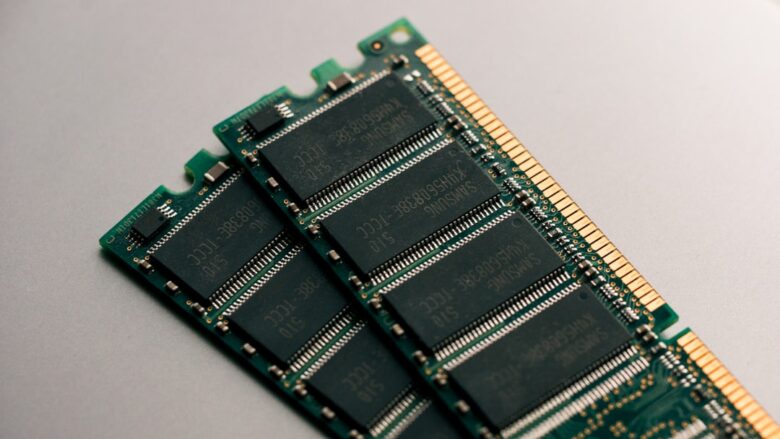
The Integrated Memory segment is the structural engine of Penguin Solutions’ transformation story, and Q2’s 63% year-over-year growth to $172 million is the clearest evidence that the thesis is translating into financial results. Integrated Memory growth in Q2 was driven by two convergent forces: a favourable pricing environment in high-bandwidth memory (HBM) and advanced DRAM modules as AI training and inference workloads dramatically expand the addressable market for memory-intensive compute; and Penguin’s specific positioning as a value-added memory solutions provider that designs and integrates memory subsystems for AI infrastructure deployments rather than simply reselling commodity DRAM.
Two new product lines announced during Q2 — the MemoryAI server and the KV cache server — are the most tangible expression of CEO Shaikh’s “AI factory platform” strategy. The KV cache server is particularly significant for the inference market: KV (key-value) caches are the memory structures that large language models maintain during inference to avoid recomputing attention values for previously processed tokens. As inference workloads scale — driven by the proliferation of AI-powered applications in enterprise software, customer service, and autonomous systems — KV cache performance becomes one of the primary bottlenecks in inference throughput per dollar. A dedicated hardware solution optimised for KV cache workloads positions Penguin at the intersection of the memory and AI infrastructure markets in a way that commodity DRAM suppliers cannot replicate. The MemoryAI server sold out shortly after launch, with production doubled in response — a concrete demand signal that validates the product-market fit thesis. Context on how the broader technology sector is navigating the AI infrastructure buildout is available through PreMarket Daily’s sector analysis.
The “AI factory platform” strategy — what Penguin is building and why it matters
CEO Kash Shaikh’s framing of Penguin Solutions as an “AI factory platform” — centred on six core elements including ClusterWare, Memory AI, OriginAI, and managed services — is an attempt to reposition the company from a hardware integrator (a business model with limited pricing power and relatively thin margins) into a platform provider that captures value across the full AI infrastructure stack. The appointment of Ian Colle as Chief Product Officer, announced alongside Q2 results, signals that Shaikh is making a serious commitment to the product-led growth model that underlies that platform ambition: a CPO hire at this stage of the company’s transformation suggests management is investing in the product organisation necessary to build and sustain a proprietary software and platform layer on top of the memory and compute hardware foundation.
The six elements of the AI factory platform framework map directly onto the bottlenecks in enterprise AI infrastructure deployment: ClusterWare addresses cluster management and orchestration (the software layer that makes distributed GPU and memory systems behave as coherent units); Memory AI addresses the inference memory bottleneck described above; OriginAI targets model serving and deployment; and the services layer captures the professional and managed services revenue that enterprise customers require to operationalise AI infrastructure at scale. If Penguin can execute across all six elements — rather than simply riding the Integrated Memory wave — the addressable market expands significantly beyond memory hardware into the broader AI infrastructure ecosystem that analysts value at hundreds of billions of dollars over the current decade.
Analyst reaction — Needham lifts to $27, Rosenblatt raises to $32, Goldman holds Buy at $25
Post-earnings analyst actions were universally constructive. Needham’s Matthew Calitri raised his price target from $25 to $27 while maintaining a Buy rating — a $2 target lift that implies approximately 30% upside from Thursday’s premarket level of $20.80, and that reflects the analyst’s increased confidence in the Integrated Memory growth trajectory and the FY2026 guidance raise. Rosenblatt Securities was more aggressive, raising its target from $30 to $32 with a Buy rating, citing specifically the Advanced Computing business’s five new non-hyperscaler customers as a signal of sustainable profitable growth beyond the current AI memory cycle. At a $32 target, Rosenblatt implies approximately 54% upside from today’s premarket price — a bullish call that requires continued Integrated Memory growth execution and successful monetisation of the AI factory platform strategy. Goldman Sachs, which initiated coverage in January at Buy with a $25 target, has not yet revised its target post-earnings but its existing Buy rating is consistent with the current consensus directional view.
The single cautionary note in the analyst landscape is Weiss Ratings, which downgraded PENG from Hold to Sell in early March — a ratings action that preceded the Q2 results and that will face pressure to be revised or maintained given the earnings beat and guidance raise. The more structural risk flagged by Simply Wall St’s analysis is valuation: PENG currently trades at approximately 79x trailing P/E, a rich multiple that reflects the market pricing in the AI memory growth trajectory rather than the current earnings base. At that multiple, any miss or guidance cut in future quarters would produce disproportionate downside — the same asymmetry that makes today’s guidance raise so consequential to the upside. Context on how to interpret analyst ratings and price targets for high-growth technology names is available through PreMarket Daily’s education series.
The guidance raise in detail — what 12% growth and $2.15 EPS requires from H2
Penguin’s FY2026 guidance revision is the single most important financial disclosure in Thursday’s premarket move. Raising the full-year net sales growth target from 6% to 12% year-over-year — while simultaneously lifting non-GAAP EPS guidance from a $2.00 midpoint to $2.15 — implies a significant H2 acceleration from H1’s trajectory. With Q2 net sales of $343 million and a trailing 12-month revenue base of approximately $1.35 billion, hitting the 12% growth target requires approximately $1.51 billion in full-year revenue — consistent with the revised guidance range of $1.465 billion to $1.601 billion. That implies H2 net sales of approximately $400–440 million per quarter, a step-up from Q2’s $343 million that is anchored to the Integrated Memory FY2026 growth guidance of 65–75%.
The Integrated Memory growth guidance increase is the most forward-looking element of the report: raising the full-year segment growth target to 65–75% — from an already strong base given Q2’s 63% year-over-year print — implies that management sees the AI inference demand driving KV cache server and MemoryAI server adoption accelerating rather than plateauing through the second half of fiscal 2026. The Brazil JV proceeds ($46.08 million), combined with the company’s $489 million cash position, provide balance sheet flexibility to fund the increased product investment (MemoryAI, KV cache, ClusterWare development) and CPO-level talent acquisition that the AI factory platform strategy requires without pressuring near-term earnings. Understanding how premarket earnings-driven moves like PENG’s 14% gap-up translate to the regular session is an important analytical step for traders assessing whether to act before or after the bell.
Why today’s move matters in the broader market context
Penguin Solutions’ 14% premarket surge is structurally significant beyond the single-stock story. It arrives on a morning when Nasdaq futures are down 1.5% — driven by Trump’s “Operation Epic Fury” speech reaffirming 2–3 more weeks of Iran strikes and the IRGC’s naming of 18 major U.S. tech companies as retaliation targets. In that environment, PENG’s move represents a concrete counter-narrative: at least one corner of the technology sector is generating genuine fundamental earnings outperformance driven by structural AI infrastructure demand that is largely immune to the Iran war’s geopolitical risk premium. Integrated Memory for AI inference is not a discretionary enterprise software purchase that gets deferred when consumer sentiment falls to 53.3 and gasoline hits $4 per gallon — it is essential infrastructure for the AI deployments that hyperscalers and enterprise customers are committed to regardless of the macroeconomic environment.
That distinction — between AI infrastructure spending as a committed capital allocation decision and consumer discretionary spending as a sentiment-sensitive variable — is the analytical lens through which PENG’s results should be read against today’s broader market backdrop. The Iran war has compressed valuations across the technology sector indiscriminately, as the VIX above 26 and the rate hike probability above 50% reduce the multiple applied to all growth equities regardless of their fundamental performance. PENG’s earnings result provides a specific data point demonstrating that the AI memory demand driving its Integrated Memory segment is not softening under macro pressure — which is relevant both for PENG specifically and for the broader read on AI infrastructure spending that investors are attempting to assess through a market overwhelmed by geopolitical noise.
This article is published by PreMarket Daily for informational and educational purposes only. Nothing here constitutes financial advice, investment recommendations, or an offer to buy or sell any securities. Always consult a qualified financial professional before making investment decisions.