
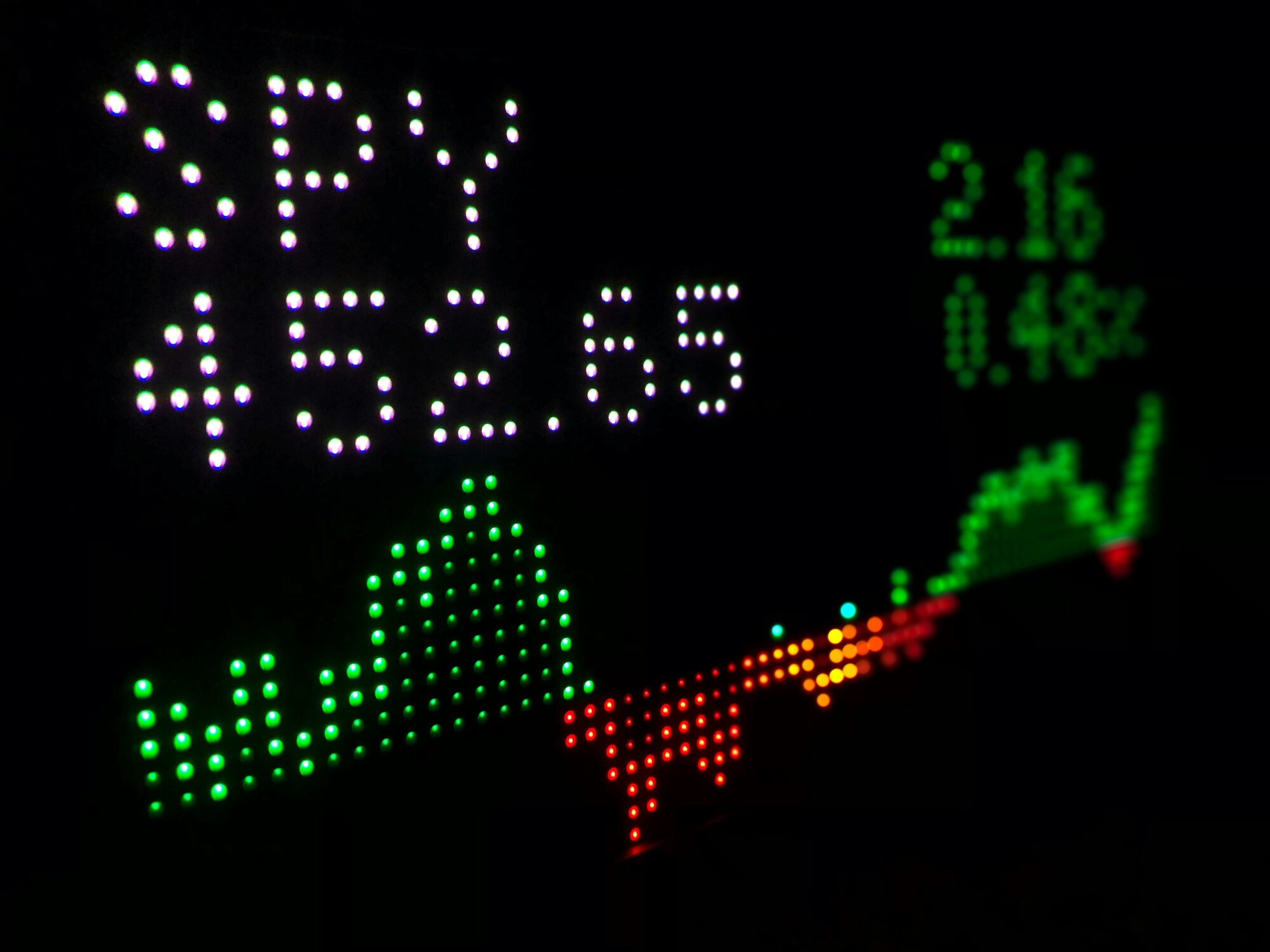

Overview
Pre-market futures for the S&P 500, Nasdaq-100, and Dow Jones Industrial Average are among the most widely tracked indicators in U.S. equity markets. This article explains how equity index futures work, what each index measures, what drives overnight price movements, and how investors can interpret futures data within a disciplined analytical framework.
Before the opening bell rings on Wall Street each trading day, futures markets are already active, processing overnight news, earnings releases, global economic data, and geopolitical developments. For investors and traders who follow U.S. equity markets, pre-market futures — particularly those tied to the S&P 500, Nasdaq, and Dow Jones Industrial Average — serve as one of the most closely watched early indicators of market sentiment. Understanding how these instruments work, what drives their movements, and how to interpret them is a foundational skill for anyone engaged in U.S. financial markets.
What Are Pre-Market Futures?
Futures contracts are standardized financial agreements to buy or sell an underlying asset at a specified price on a predetermined date. In the context of pre-market trading, equity index futures allow market participants to take positions on the anticipated direction of major U.S. stock indices before the regular cash market session opens at 9:30 a.m. Eastern Time.
The three most widely monitored index futures are E-mini S&P 500 futures (ES), E-mini Nasdaq-100 futures (NQ), and E-mini Dow Jones Industrial Average futures (YM), all of which trade on the Chicago Mercantile Exchange (CME). These contracts trade virtually around the clock — from Sunday evening through Friday afternoon — making them uniquely capable of capturing global sentiment shifts that occur outside U.S. market hours.
Key stat: As of recent data, average daily trading volume for E-mini S&P 500 futures exceeds 1.2 million contracts, representing notional exposure of over $250 billion per day — making it one of the most liquid financial instruments in the world.
The S&P 500, Nasdaq, and Dow: What Each Index Represents
Each of the three major index futures tracks a different underlying benchmark, and understanding their composition helps investors interpret pre-market signals more precisely.
The S&P 500 is a market-capitalization-weighted index comprising 500 of the largest publicly traded U.S. companies across all major sectors. It is broadly considered the most comprehensive barometer of the U.S. large-cap equity market, and S&P 500 futures are the most widely used by institutional investors for hedging and directional exposure.
The Nasdaq-100, tracked by NQ futures, is heavily weighted toward technology and growth-oriented companies including Apple, Microsoft, Nvidia, Amazon, and Meta. Because of this concentration, Nasdaq futures tend to exhibit greater sensitivity to interest rate expectations, earnings reports from mega-cap tech names, and risk-appetite shifts in global markets.
The Dow Jones Industrial Average (DJIA) is a price-weighted index of 30 blue-chip U.S. companies. While it carries historical significance as one of the oldest indices, its price-weighting methodology — rather than market-cap weighting — means that higher-priced stocks exert a disproportionate influence. Dow futures are often monitored as a sentiment gauge for traditional industrial and financial sectors.
How Pre-Market Futures Drive Market Expectations
Pre-market futures do not directly determine where stocks will open, but they provide a strong directional signal. When S&P 500 futures are trading significantly higher than the prior day’s settlement, market participants generally anticipate a positive open for equities. The reverse holds in risk-off environments.
Several catalysts routinely move futures prices during overnight and pre-market sessions. These include U.S. economic data releases — such as the monthly Non-Farm Payrolls report, Consumer Price Index (CPI) figures, and Federal Open Market Committee (FOMC) rate decisions — as well as earnings results from market-moving companies, central bank commentary from overseas institutions, and geopolitical developments.
Key stat: According to research by CME Group, roughly 25% of the S&P 500’s annual price movement has historically occurred outside of regular U.S. trading hours, underscoring the significance of monitoring overnight and pre-market futures activity.
Divergences between the three major futures contracts also carry analytical value. If S&P 500 futures are flat while Nasdaq futures are sharply lower, it may signal that the market is pricing in a sector-specific risk — such as a disappointing earnings report from a large-cap technology company — rather than a broad macroeconomic concern.
Practical Considerations for Interpreting Futures Data
Pre-market futures readings are best interpreted alongside other data points rather than in isolation. Fair value — the theoretical price at which futures should trade relative to the underlying index, accounting for interest rates, dividends, and time to expiration — is an important reference point. When futures trade at a premium to fair value, it suggests buyers are more aggressive; when they trade at a discount, sellers are in control.
It is also important to recognize that pre-market futures can be subject to exaggerated moves due to lower liquidity outside regular trading hours. A sharp move in futures at 3:00 a.m. Eastern may not fully sustain once the cash market opens and deeper two-way liquidity is restored. Traders with experience in futures markets account for this dynamic when calibrating their pre-market analysis.
Volume context matters as well. A 1% move in S&P 500 futures on above-average volume is generally considered a more meaningful signal than the same move on thin overnight trading. Platforms such as CME Group’s market data tools, Bloomberg Terminal, and financial data aggregators provide real-time volume data alongside futures price quotes.
Conclusion
Pre-market futures for the S&P 500, Nasdaq-100, and Dow Jones Industrial Average represent some of the most data-rich signals available to market participants before the regular trading session begins. By understanding the structure of each index, the mechanics of futures pricing, and the range of catalysts that drive overnight moves, investors and analysts are better equipped to contextualize pre-market data within their broader market framework. As with all financial instruments, pre-market futures are one input among many — powerful when used with discipline and proper analytical context.