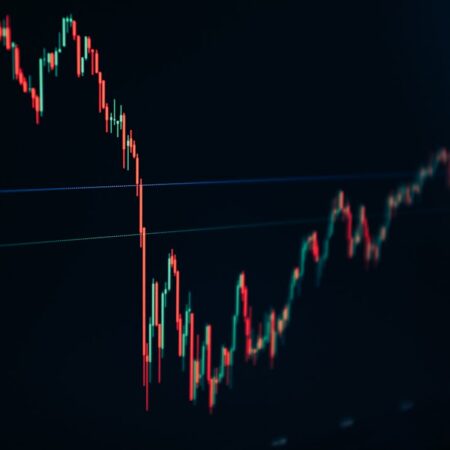
November 9, 2026 — U.S. equities opened sharply higher, with the S&P 500 gaining 0.81% to 7,436.76 at the opening bell before extending to 7,511.55 — a gain of 1.83% — by 10:14 AM ET, as dip buyers flooded back into the market following four consecutive weeks of losses in technology. The Dow climbed 763 points. The Nasdaq rose to 25,143. And the whole session is happening in the shadow of the most disruptive governance story the chip sector has seen in years.
Key takeaways
- Nvidia shares fell 4.02% to $179.14 by 10:14 AM ET on Monday, November 9, after the Nvidia board announced an independent investigation into CEO Jensen Huang’s relationship with an alleged Chinese intelligence operative.
- The S&P 500 extended its opening gain to 1.83% by mid-morning on November 9, 2026, adding approximately $1 trillion in market value as technology dip buyers returned after four straight weeks of declines.
- Greenfire Resources surged 38.75% in premarket trading on November 9, 2026, after Strathcona Resources agreed to acquire the oil sands producer at a 39% premium to its November 6 closing price.
When the Index Climbs Over Its Biggest Stock
The broadening is real and the numbers confirm it. U.S. stocks added $1 trillion in market value in the opening period of trading, even as Nvidia — still the index’s largest single weight — bled 4.02% to $179.14. The SPY ETF traded at $743.34 at 9:34 AM ET, up 1.09% from its prior close of $735.29, putting it up 9.01% year to date. That divergence — a trillion-dollar market gain alongside a $225 billion Nvidia markdown — tells you exactly what this tape is doing: rotating, not retreating.
The catalysts stack up on both sides. Nvidia’s board opened an independent investigation after CEO Jensen Huang disclosed to employees that he had an affair with a woman intelligence agencies allege is a Chinese spy. The board, in its official statement, said it has no current reason to believe national security or Nvidia’s proprietary information was compromised — but the inquiry is live, the outside counsel is engaged, and the headline risk does not expire with today’s session. Separately, October payrolls came in at 165,000 — more than double the 65,000 economists had forecast — with the unemployment rate ticking down to 4.1% and prior months revised up by a combined 84,000 jobs. That labor data alone would have been enough to push equities higher. Combined with a beat-down tech sector entering the week at deeply oversold levels, it produced the opening surge traders are now navigating.
As we flagged Friday, a payroll number this strong forces a choice between a ‘soft landing confirmed’ read and a ‘Fed stays higher for longer’ read. This morning, the market chose the former — at least for the first 45 minutes.
The Huang Disclosure and What It Actually Puts at Risk
Nvidia’s investigation centers on the nature and extent of Huang’s relationship with the woman, and whether any proprietary or national security information was exposed. The board has been categorical that it currently sees no evidence of a breach — but ‘no current evidence’ is not the same as ‘no breach,’ and the distinction will matter to institutional holders who have concentrated positions. Huang disclosed the relationship himself in a memo to staff, which limits the character-of-disclosure risk but does nothing to shorten the investigation timeline.
The premarket slide of approximately 5% — which would have implied a roughly $225 billion market cap reduction — settled to a 4.02% decline by mid-morning. That partial recovery is itself a data point: some buyers looked at the $175 range and stepped in. Whether that floor holds depends entirely on what the independent counsel’s scope reveals over coming weeks. As we covered in depth, the AI trade is simultaneously navigating legal and geopolitical pressure that has nothing to do with chip demand fundamentals.
The Stocks the Tape Actually Rewarded This Morning
Away from Nvidia, the session’s winners are worth taking seriously as a signal of where risk appetite is settling. Greenfire Resources hit a 52-week high, trading as high as $7.77 and last printing at $7.74 on volume of 1.66 million shares, after Strathcona Resources agreed to acquire the oil sands producer in a deal that offers each Greenfire shareholder either C$11.00 in cash or 0.25 Strathcona shares — a cash premium of 39% above Greenfire’s November 6 close of $5.60. The deal is clean, the premium is generous, and the premarket +38.75% move tells you the arbitrage community is not pricing meaningful deal-break risk.
Ubiquiti printed $592.84, up 15.29%, on volume of 170,117 shares against an average of 133,882. Coherent advanced 13.58% after Citi raised its price target following strong quarterly results and updated guidance — the stock had closed at $192.98 on November 6. Rocket Lab jumped 15.39% as traders reacted to the sharp rebound following extended share price losses. All four of those moves share a common thread: they are companies with specific, verifiable catalysts, not general AI-sentiment plays. That specificity is what this tape is currently paying for.
On the losing side, Ionis Pharmaceuticals dropped 18.75% and monday.com fell 13.31% in premarket — both moves driven by company-specific catalysts rather than macro pressure. Akamai Technologies slid 6.14%. The premarket loser list reads like a stock-picker’s session, not a systemic selloff.
Where the Risks Are Priced — and Where They Aren’t
The S&P 500’s 52-week range runs from 6,316.91 to 7,844.52. At 7,511, the index is trading roughly 4.2% below its all-time range high, having spent the past month giving back gains — SPY fell 4.36% from October 7 to the prior Friday. The rebound is real. Whether it’s durable is a separate question entirely.
Three risks are not fully priced in this tape. First, the Nvidia investigation has an open-ended timeline; the board said the inquiry will examine ‘all available information,’ which is language that buys time, not certainty. Second, the strong payroll report — 165,000 jobs added versus 65,000 expected — raises the probability that the Fed delays any rate cut it might have been contemplating; the rate path remains a live threat to this rally. Third, the XLK tech sector ETF fell 8.2% last week — the worst weekly performance of any major sector — and a 1.8% index bounce does not mathematically repair that damage for funds running sector-weight mandates.
The consensus read this morning is ‘buy the dip, the fundamentals are intact.’ The alternative read — which the tape is not currently entertaining — is that the Nvidia headline breaks the psychological seal on CEO governance risk across the AI sector at exactly the moment the Fed has least room to absorb a confidence shock.
| Level / Event | Value | Signal |
|---|---|---|
| NVDA floor to watch | $175.00 | Break below reframes the investigation as a valuation event, not just a governance headline |
| S&P 500 intraday extension | 7,511.55 | Holding above 7,444 (opening day high) through noon confirms dip-buy conviction |
| S&P 500 prior close | 7,353.73 | Retest of this level on any afternoon reversal would erase the morning’s gains entirely |
| GFR deal premium | 39% | Narrow arb spread signals market sees low deal-break probability; watch SCR share price for confirmation |
| S&P 500 52-week high | 7,844.52 | Roughly 4% above current levels; sustained close above 7,600 needed to shift the monthly trend back to bullish |
What the Rest of the Session Needs to Confirm
This morning’s move has the right ingredients to extend — a blowout jobs number, deeply oversold tech names, and a specific Nvidia catalyst that the market is currently treating as isolated rather than systemic. The question is whether that read survives the afternoon. Last week’s sector rotation was sharper than most models anticipated, and the XLK’s 8.2% weekly decline left a lot of institutional books underwater on tech weight.
Three things would validate the bull case into the close: Nvidia holding above $175, the S&P 500 sustaining above 7,444 through the noon hour, and the Nasdaq Composite maintaining its gains rather than fading as the Huang headlines cycle through afternoon media. Any two of those three failing would shift the probability toward a session that opened strong and gave it back — a pattern the market has seen more than once in the past month.
The jobs data is unambiguously good. The Nvidia story is unambiguously open-ended. Right now, the tape is betting the former outweighs the latter. By 4:00 PM, we’ll know whether that bet held.
Market mood: the PreMarket Sentiment Index stood at 4/100 (Strong risk-off) at the November 5, 2026 close.
Want our briefings first? Add PreMarket Daily as a preferred source on Google to see more of our coverage in Top Stories.
This article is published by PreMarket Daily for informational purposes only. Nothing here constitutes financial advice, investment recommendations, or an offer to buy or sell any securities. Always consult a qualified financial professional before making investment decisions.

Other Articles