NEW YORK, April 20, 2026 — U.S. equity markets opened the week under pressure Monday morning as Iran’s abrupt closure of the Strait of Hormuz — and the U.S. Navy’s seizure of an Iranian vessel — erased the geopolitical calm that had propelled the S&P 500 to a record close of 7,126.06 on Friday. The benchmark index slipped approximately 0.2% at the open, the Nasdaq Composite shed a similar margin from its Friday finish of 24,468.48, and the Dow Jones Industrial Average oscillated within 0.1% of its 49,447.43 close in either direction. The sole conspicuous exception to the risk-off tone was the semiconductor complex, where a historic thirteen-day rally showed no sign of exhaustion.
Opening bell standout — Philadelphia Semiconductor Index (SOX): 30% in 13 days, AI supercycle accelerates
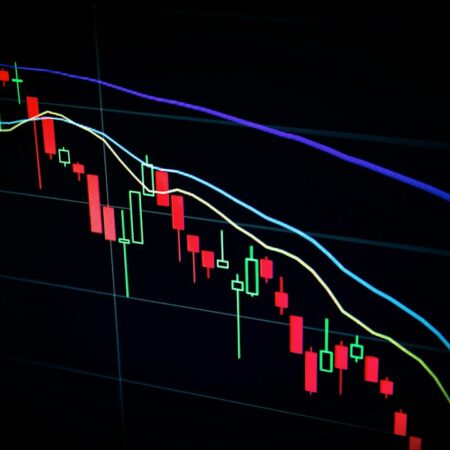
While broader indices retreated, the Philadelphia Semiconductor Index extended what CNBC’s markets desk described as the largest rally of its kind since 2002, with the SOX having surged 30% over the preceding 13 trading days. The morning’s new-highs list read, in the words of multiple trading desks, like a chip sector directory. Individual name performance through recent sessions has been extraordinary: AMD has gained 242% in April, Broadcom is up 38%, Micron has added 41%, and Nvidia has tacked on 22%.
The fundamental catalyst underpinning the move crystallised further on Monday. Reuters reported that Taiwan Semiconductor Manufacturing Company (TSM) delivered first-quarter revenue of 1.134 trillion New Taiwan dollars — approximately $35.6 billion — a 35% year-over-year surge and the first time the foundry’s quarterly sales had crossed the trillion-dollar threshold in local currency. The result significantly surpassed the high end of TSMC’s own guidance. March alone saw sales jump 45% to roughly $13 billion, a figure that analysts interpreted as evidence that the AI supercycle is entering a higher gear rather than plateauing.
Geopolitical shock — Iran shuts Strait of Hormuz, crude surges 6.3%
The macro backdrop at the open was materially less constructive than Friday’s close suggested. Over the weekend, Iran fired on vessels in the Strait of Hormuz and abandoned its promise to allow passage through the waterway, with Tehran claiming Washington had broken a ceasefire agreement. President Trump, for his part, announced that the U.S. Navy had seized an Iranian ship and disabled its engine room. The sequence of events, detailed in Reuters’ weekend coverage, represented a sharp deterioration from the ceasefire optimism that had driven Friday’s gains.
The oil market’s reaction was immediate and substantial. U.S. benchmark crude gained $5.18, or 6.3%, to $87.88 a barrel at the Monday open. Brent crude, the international standard, rose 5.3% to $95.20 a barrel. PreMarket Daily had flagged the escalation risk ahead of Monday’s session — readers can review the full pre-market analysis in the premarket roundup for April 20 and the dedicated S&P 500 futures analysis published earlier this morning.
Volume and price action — first 15 minutes
Broad market tape
The opening minutes reflected a market processing two conflicting signals simultaneously. On one side, a geopolitical shock of the first order: the world’s most strategically important oil chokepoint closed, with live military engagement between U.S. naval forces and Iran. On the other, a semiconductor earnings cycle that continues to dramatically exceed expectations. The result was a tape that lacked conviction in either direction for the broader indices. The S&P 500’s 0.2% opening decline from Friday’s record was, in historical context, a measured response to a Strait of Hormuz closure — a sign that some of the risk had been partially discounted in futures markets overnight.
The Dow’s near-flat print similarly suggested institutional participants were not aggressively repositioning at the open, preferring to observe the first hour’s price action before committing size. Bid-ask spreads in energy names widened noticeably in the opening minutes, consistent with elevated uncertainty around the pace of crude’s move. The Financial Times’ markets live blog noted that options markets were pricing elevated volatility in energy-linked names through the week.
Semiconductor complex
In sharp contrast, the semiconductor sector opened with what traders characterised as institutional accumulation rather than retail momentum chasing. The consistency of the SOX’s advance over 13 sessions — 30% without a meaningful retracement — points to systematic fund flows rather than speculative positioning. TSMC’s blowout quarter, with revenue 35% above the year-ago period and March sales up 45%, provided fundamental justification for valuations that might otherwise appear stretched. The Wall Street Journal’s tech coverage highlighted that TSMC’s results effectively validated the capital expenditure commitments made by hyperscalers throughout the first quarter. For context on one AI infrastructure name that has benefited from this dynamic, PreMarket Daily’s recent Nebius Group deep dive explored how the $27 billion Meta deal is reshaping valuations at the infrastructure layer.
What to watch in the first hour
The first hour of trading on Monday, April 20 presents a clear set of inflection points across the three dominant themes: the Strait of Hormuz closure, the semiconductor momentum trade, and the week’s earnings calendar — which includes Steel Dynamics reporting today and, more significantly, Tesla’s Q1 results arriving Wednesday. The week-ahead preview published Sunday laid out the collision course between Tesla’s consensus EPS estimate of $0.37 and the Iran deadline framework.
| Level / Event | Value | Signal |
|---|---|---|
| S&P 500 Friday record close | 7,126.06 | Sustained break below opens path to 7,041 prior all-time high as new support test |
| WTI crude opening level | $87.88 | Hold above $85 sustains energy sector bid; break below signals partial Hormuz risk unwind |
| Brent crude opening level | $95.20 | Approach toward $100 would materially re-price inflation and Fed rate path expectations |
| SOX 13-day rally extent | +30% | First hourly close below Friday’s SOX low would be the earliest signal of momentum exhaustion in semis |
Energy sector names warrant close monitoring through 11:00 AM ET. A crude price that remains elevated — or continues to climb — would historically rotate institutional flows from technology into energy and defence. The semiconductor complex, by contrast, faces a test of whether its AI-demand thesis can insulate it from a broader risk-off session: TSMC’s record quarter suggests the fundamental case remains intact, but a 30% index move in 13 days leaves little margin for disappointment on any datapoint.
Steel Dynamics’ earnings, due Monday, will provide an early read on industrial demand conditions. While not a market-moving report in isolation, any commentary on domestic steel consumption will inform the broader industrials picture heading into a week that culminates in Tesla’s results Wednesday. For readers tracking the broader Friday setup that preceded Monday’s session, PreMarket Daily’s market close report from April 17 details how the S&P 500 reached that 7,126.06 record and what risk factors had been flagged at the time.
First-hour context
The opening bell on April 20, 2026 presents a market attempting to reconcile two powerful and contradictory forces. The semiconductor sector, powered by TSMC’s record $35.6 billion quarter and sustained hyperscaler AI capital expenditure, continues to operate in what looks structurally like a multi-year demand cycle. The S&P 500 and Nasdaq, sitting at or near all-time highs, reflect that thesis. Against it stands a Strait of Hormuz closure that, if sustained, carries implications not only for crude prices but for global supply chain costs and central bank policy timelines. WTI at $87.88 and Brent at $95.20 are not yet at crisis levels historically, but the direction and velocity of Monday’s move demand attention. The first hour’s price action — specifically whether the S&P 500 holds above the 7,041 prior all-time high level and whether crude stabilises below $90 — will set the tone for a week that carries some of 2026’s most consequential scheduled risk events.
This article is published by PreMarket Daily for informational purposes only. Nothing here constitutes financial advice, investment recommendations, or an offer to buy or sell any securities. Always consult a qualified financial professional before making investment decisions.